What CFM Should a Microwave Over the Range Have?
For most kitchens, 300 to 400 CFM is a practical range for a microwave over the range. Match airflow to your cooking and vent route, then check the microwave's installation requirements.
On this page (9 sections)
- How much CFM does a microwave over the range need?
- What does CFM tell you about microwave ventilation?
- Is 300 CFM enough for everyday cooking?
- When is 400 CFM a better fit?
- Should you choose a slim microwave with a higher-CFM fan?
- Does venting style change how much CFM you need?
- What should you check before buying a microwave vent?
- How should you set up and care for a microwave vent?
- Which CFM should you choose?
For most kitchens, 300 to 400 CFM is a practical range for a microwave over the range. To choose CFM for a microwave over range, start with how often you fry, sear, or cook foods that make steam and odors, then check the vent route your kitchen can support.
CFM means cubic feet per minute. It measures the fan's rated airflow, so the number is useful for comparing models, but it is only one part of ventilation performance.
How much CFM does a microwave over the range need?
A 300 CFM fan can suit lighter cooking, while 400 CFM or more is worth considering for frequent frying or steamy meals. Treat those as starting points, then check your range and microwave instructions for installation limits.
A microwave hood vent draws fumes through a filter or duct system. Duct length, bends, size, and blockages can affect airflow after installation.
If you regularly sear meat or fry food, stronger ventilation may be useful. If you mostly simmer, boil, or reheat, a 300 CFM model may fit your routine.
What does CFM tell you about microwave ventilation?
CFM tells you the fan's rated airflow, not how quietly it runs or how much air reaches outdoors. The duct route, filters, and installation affect the result in your kitchen.
A higher rating can move more air under suitable conditions, but a cramped or poorly routed duct can limit the benefit. Clean filters and an open vent path help the fan do its job.
For a plain-language overview of the appliance, see our guide to over-the-range microwave ovens. If airflow is your main concern, our guide to high-CFM over-the-range microwaves focuses on those options.
How to choose CFM for a microwave over range
Choose airflow according to your cooking habits and the vent route available in your kitchen. A 300 CFM fan may be enough for modest cooking, while frequent high-heat cooking points toward a stronger fan or a separate hood.
Use these questions to narrow the choice:
- Do you mostly simmer, boil, or reheat? A 300 CFM model may suit that routine.
- Do you fry or sear often? Consider 400 CFM or more.
- Does your duct have several bends or a long run? Check the installation instructions and duct requirements before buying.
- Will the microwave recirculate air? Check which filters it uses and how to care for them.
- Is cabinet clearance tight? Compare the appliance's height and depth as well as its fan rating.
The fan's speed settings matter too. A two-speed fan gives you a choice of airflow; choose a setting you'll use when cooking.
Is 300 CFM enough for everyday cooking?
For meals that create modest smoke and steam, a 300 CFM fan may be a practical choice. It fits kitchens where cooking is mostly reheating, boiling, or simmering rather than frequent high-heat searing.
The GE JVM3160RFSS has a 300 CFM, two-speed ventilation system and a replaceable charcoal filter. Choose it if you want a 30 in over-the-range microwave with a 1.6 cu ft cavity and a moderate fan rating; skip it if your routine calls for stronger airflow.
Before buying, confirm the vent mode and installation fit for your kitchen. A recirculating setup returns filtered air to the room, while an outdoor duct carries air away.
If you often see smoke or deal with strong cooking odors, compare a higher-airflow model or a separate hood. Our guide to over-the-range microwaves versus range hoods explains the tradeoffs.
When is 400 CFM a better fit?
Consider 400 CFM if frying, searing, or steamy cooking is a regular part of your routine. It offers a step up from 300 CFM, provided the vent route and installation suit the appliance.
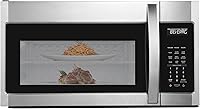
The BLACK+DECKER 1.9 Cu Ft microwave has a two-speed, 400 CFM fan and a larger cavity than the GE. It may suit households that want both more rated airflow and more room for dishes; skip it if its dimensions or installation requirements don't fit your kitchen.
The microwave measures 29.88 in wide, 16.41 in deep, and 15.41 in high. Compare those measurements with your cabinet opening, cooktop clearance, and vent route before choosing it.
Should you choose a slim microwave with a higher-CFM fan?
A slim microwave can save overhead space while still offering substantial rated airflow, but its smaller cooking cavity may not suit every household. Compare cabinet clearance, capacity, and venting mode before deciding.
Samsung's Smart SLIM model combines a 550 CFM hood vent with a 1.1 cu ft cavity. Choose it if a slim profile and higher airflow are priorities; skip it if you need more interior room.
The Midea low-profile model has a 400 CFM fan and a 1.2 cu ft cavity. It may suit a buyer who wants a slim body with moderate ventilation; skip it if you need a larger microwave cavity.
Compare the unit's height, depth, and capacity with your available space and cooking needs. See how over-the-range microwaves are vented to understand the difference between ducted and recirculating setups.
Does venting style change how much CFM you need?
Yes, the vent route affects how useful the fan's rated airflow can be. Outdoor venting carries air outside, while recirculating ventilation filters it and returns it to the room.
A ducted setup needs a suitable route through a wall or cabinet and out of the home. Long runs and sharp turns can restrict airflow, so check the installation instructions and duct route before buying.
Recirculating ventilation depends on clean, correctly fitted filters. Charcoal filters help reduce cooking odors, while grease filters collect airborne grease.
Read our guide to how over-the-range microwaves are vented before assuming a higher CFM model will work with your current setup. For filter care, see how to clean over-the-range microwave filters.
What should you check before buying a microwave vent?
Confirm venting mode, duct compatibility, cabinet fit, and cooktop clearance before choosing by CFM. A fan rating alone won't tell you whether a microwave will fit or connect to your kitchen.
Measure the cabinet opening and compare it with the microwave's width, height, and depth. Check the installation instructions for the required clearance above the cooktop and duct size and routing.
For a replacement, compare the existing microwave's mounting and vent configuration with the new model. Our guide to standard over-the-range microwave dimensions can help you plan those measurements.
How should you set up and care for a microwave vent?
Follow the microwave's installation instructions and keep its vent path and filters clear. Good setup and routine care help the fan move air through the route your kitchen uses.
Before installation, confirm whether the unit will vent outdoors or recirculate, and make sure the intended duct route suits the microwave. If it recirculates, install the correct filters and check how they should be cleaned or replaced.
During cooking, switch the fan on when you start a smoky or steamy task. Clean grease filters as directed and replace charcoal filters when needed; a clogged filter can impede airflow.
Which CFM should you choose?
Choose 300 CFM for modest everyday cooking and consider 400 CFM or more for frequent frying, searing, or heavy steam. For a slim model, weigh the Samsung's 550 CFM fan against its smaller 1.1 cu ft cavity, or consider the Midea's 400 CFM fan and 1.2 cu ft cavity.
If smoky cooking is common or your duct path is restrictive, compare the setup with a separate hood before deciding. Use our high-CFM microwave guide to compare higher-airflow options.
Frequently asked questions
Is 300 CFM enough for an over-the-range microwave?
A 300 CFM fan may suit routine cooking with modest smoke and steam, especially when the microwave vents outdoors through a short, clear duct. Frequent frying, searing, or a long duct run can make stronger ventilation more useful.
Check the range and microwave instructions before choosing.
Is 400 CFM good for a microwave over the range?
A 400 CFM fan can suit cooks who regularly produce more steam or odor than light everyday cooking creates. Its usefulness depends on the duct, installation, and whether air vents outdoors or recirculates through filters, so check those details along with the rating.
Is higher CFM always better?
No. A higher CFM rating means more rated airflow, but the vent route and installation affect how much that helps clear cooking fumes.
Check that the microwave suits your range and vent setup, and consider whether a separate range hood better fits frequent high-heat cooking.
What does CFM mean on a microwave?
CFM means cubic feet per minute, a measure of a fan's rated airflow. It does not tell you how much airflow reaches outdoors after installation or how well the fan captures fumes.
Duct size, bends, filters, and venting mode also matter when comparing microwaves.