Do Over-the-Range Microwaves Vent the Stove?
Yes, an over-the-range microwave vents fumes from the stove, but only when its fan is set up to exhaust outside. The vent pulls smoke, steam and odors up from the cooktop and pushes them through a duct to the outdoors, so the stove hood and the microwave share one job.
On this page (8 sections)
- How does an over-the-range microwave vent cooking fumes?
- Do over-the-range microwaves vent the stove outside the house?
- Which venting mode should you pick for your kitchen?
- How much airflow do you need to vent a stove?
- Does the vent work when the microwave is off?
- What do the filters do, and how do you keep the vent strong?
- How do you check whether your microwave vents outdoors?
- The bottom line on venting the stove with an over-the-range microwave
Yes, an over-the-range microwave vents the stove, but only when its fan is set up to exhaust outside. The vent pulls smoke, steam and odors up from the cooktop and pushes them through a duct to the outdoors, so the microwave and the old stove hood share one job.
That answer matters because the microwave over your range does two things at once. It heats food in the cavity and it acts as the exhaust hood for the burners below.
Whether it clears the air well depends on how the fan is configured and how the duct runs. Here's how to tell what yours does and what to look for when you buy.
How does an over-the-range microwave vent cooking fumes?
It pulls air up through vents on the underside, filters it, and moves it out through a duct or back into the room. The fan sits above the cooktop and below the microwave cavity.
The underside has intake vents that sit over the burners. When you switch on the fan, it draws smoke and steam from the stove into those vents.
A grease filter catches fat droplets so they don't coat the fan or the duct. From there the air takes one of two paths.
Ducted models push the air through a duct in the wall or ceiling to the outdoors. Recirculating models pass it through a charcoal filter and blow it back into the kitchen through a vent at the top or front.
Many over-the-range microwaves can be installed either way, and the install instructions set the mode. Our guide to how are over-the-range microwaves vented walks through each path in more detail.
Do over-the-range microwaves vent the stove outside the house?
Ducted models do, and recirculating models don't. A ducted unit sends fumes outdoors, while a recirculating unit cleans the air and returns it to the kitchen.
The difference is the duct. A ducted install needs a metal duct running from the top or back of the microwave to a wall or roof cap.
The fan pushes air through it, and the cap lets it out. This is the setup that truly vents the stove.
A recirculating install has no duct. The fan pulls air through the grease filter and a charcoal filter, then releases it back into the room.
It removes some smoke and grease, but odors and moisture stay indoors longer. Many models ship ready for one mode and include parts for the other.
Check which one your cabinet and wall allow before you buy.
Which venting mode should you pick for your kitchen?
Pick ducted if your kitchen already has a duct or you can run one, because it clears smoke and odors best. Pick recirculating only when a duct isn't possible.
A ducted setup is the stronger choice for anyone who sears, fries or cooks on a gas range. The fan pushes fumes out of the house instead of spreading them around the room.
A recirculating unit suits light cooking and kitchens without a path to the outside.
The trade-off is the work. A ducted install needs a route through a wall or roof, plus a cap and sometimes a transition piece.
A recirculating unit drops into the same spot as a hood with far less work. If you're weighing the two appliances, our comparison of over the range microwave vs range hood covers the venting and space differences.
How much airflow do you need to vent a stove?
Match the CFM to your burners and cooking style. A 300-CFM fan handles light cooking, and a 400-CFM fan moves more smoke for searing and frying.
CFM means cubic feet per minute, the volume of air the fan moves. A two-speed system lets you run low for simmering and high for smoke.
The higher the CFM, the more duct capacity you need, so a 400-CFM unit needs a duct sized for that airflow.
The vent also needs to sit close to the burners. An over-the-range microwave hangs over the cooktop, so its intake vents are already near the heat source.
That placement is why it can clear fumes from the stove as well as a basic hood. For stronger options, see our roundup of the best over the range microwave with high cfm.
Which microwave works best for heavier cooking?
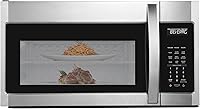
The BLACK+DECKER 1.9 Cu Ft Over-the-Range Microwave is tied for the highest CFM in this group. Its two-speed 400-CFM venting system moves more air, and cooktop LED lighting shows the burners below.
The 1.9 cu ft cavity with a 13.6-inch turntable suits large dishes, and the turntable can be switched off for oversized cookware. Ten power levels and one-touch auto menus cover everyday heating.
It measures 29.9 in wide, 13.9 in deep and 16.4 in high, so measure the opening above your range before you order.
Does the vent work when the microwave is off?
Yes, the vent fan runs on its own. You can clear the stove's fumes without heating anything in the microwave cavity.
The fan is a separate function from the cooking controls. Turn it on when the burners heat up, and let it run a few minutes after you finish so smoke and steam clear.
The cooktop light often works the same way.
Running the fan only when you microwave would leave the stove uncovered. The vent exists for the cooktop, so treat the fan switch as the hood control.
This is the same idea as a range hood, just built into the microwave cabinet.
What do the filters do, and how do you keep the vent strong?
Grease filters trap fat, and charcoal filters cut odors in recirculating setups. Clean the grease filter often so airflow doesn't drop.
A clogged grease filter chokes the fan. Wash the mesh filter in warm soapy water, or run it through the dishwasher if the maker allows it.
A charcoal filter in a recirculating unit needs replacing on the maker's schedule, since it can't be washed.
Fumes that linger, or a fan that sounds strained, usually point to a dirty filter or a blocked duct. Check both before assuming the vent has failed.
If you want to compare venting performance across models, our guide to the best over the range microwave for venting covers what to look for.
Which microwave fits a low cabinet over the range?
The GE Profile 1.2 Cu Ft Low Profile Over-the-Range Microwave is the pick when the space above the range is short. It fits in the same space as a regular undercabinet hood and has a two-speed 400-CFM venting system.
It measures 29.88 in wide, 18.63 in deep and 10.31 in high, so it leaves room for the cooktop without crowding the cabinet line. Sensor cooking adjusts time and power, and LED cooktop lighting brightens the whole stovetop.
Melt, time defrost and weight defrost settings round out the controls.
Which microwave balances size and venting for everyday cooking?
The BLACK+DECKER 1.7 Cu Ft Over-the-Range Microwave is a middle option for a normal cabinet opening. Its two-speed vent fan moves 300 CFM, enough for routine cooking on an electric or gas range.
The cavity is 1.7 cu ft with a 12.4-inch turntable, and the body measures 29.9 in wide, 13.2 in deep and 16.4 in high. Ten power levels and quick menus for popcorn, beverage, melt/soften, reheat and defrost cover common jobs.
Multi-stage cooking lets you set two power levels in one cycle. It weighs 49 lb, against 57.4 lb for the 1.9 cu ft BLACK+DECKER.
How do you check whether your microwave vents outdoors?
Look for a duct at the top or back of the unit and a wall or roof cap outside. A ducted install has metal ductwork running away from the microwave; a recirculating one has no duct.
Pull the microwave's install instructions and check the venting mode marked for your unit. Many are set at the factory for one mode and switched for the other during install.
If the fan blows air out the top front grille, it's recirculating. If it pushes air into a duct, it's ducted.
You can also trace the path from the cabinet above the microwave. A ducted unit continues through that cabinet and out.
A recirculating unit stops there and returns air to the kitchen. Check the grease filter and, in a recirculating unit, the charcoal filter, then confirm the fan runs on both speeds.
The bottom line on venting the stove with an over-the-range microwave
Do over the range microwaves vent the stove? They do when the fan is ducted outdoors, and they only recirculate when there's no duct.
The fan pulls fumes from the burners, filters out grease, and either sends the air outside or returns it to the room.
For most kitchens, a ducted model with a two-speed 400-CFM fan is the best fit. Pick the BLACK+DECKER 1.9 Cu Ft for its larger 1.9 cu ft capacity, the BLACK+DECKER 1.7 Cu Ft for a smaller everyday unit, or the GE Profile Low Profile when cabinet height is tight.
Measure the opening and check the venting mode before you buy.
Frequently asked questions
Do over-the-range microwaves vent the stove if there's no duct?
They recirculate instead. The fan pulls fumes through a filter and sends the air back into the kitchen, so smoke and odors linger more.
Many models can be switched between ducted and recirculating setups, so check the installation instructions for the mode yours supports.
Does the microwave fan need to run while I cook?
Turn it on before the cooktop heats up and let it run a few minutes after you finish. It moves smoke and steam away at the source instead of letting them spread across the kitchen.
The vent works independently of the microwave cooking function.
How many CFM does an over-the-range microwave need?
Match the fan to your cooking style. A 300-CFM two-speed fan handles light cooking like boiling and reheating, while a 400-CFM two-speed system moves more smoke during searing or frying.
Higher CFM needs a duct that can carry the airflow.
What filter does an over-the-range microwave use?
A ducted unit usually has washable grease filters that trap fat before it reaches the duct. A recirculating unit adds a charcoal filter to cut odors.
Clean the grease filters regularly so airflow stays strong, and replace charcoal filters as the maker directs.