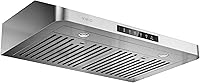
Ducted or Ductless Range Hood: Which Fits Your Kitchen?
Choose ducted if your kitchen can run a duct to the outside; choose ductless if there is no practical path for one. Ducted hoods push smoke and moisture outdoors, while ductless models recirculate filtered air back into the room.
On this page (9 sections)
- Which type fits your kitchen layout?
- How does a ducted hood clear the air?
- How does a ductless hood handle smoke and odors?
- What does each type cost in effort and upkeep?
- Which type handles grease and moisture better?
- How much noise should you expect?
- Can a ducted hood become ductless?
- What should you check before you buy?
- Which should you pick for your kitchen?
A duct or ductless range hood question comes down to one thing: can you get a duct to the outside? If yes, a ducted hood clears smoke and moisture best.
If no, a ductless hood filters the air and sends it back into the kitchen.
The choice affects more than installation. It changes how well the hood handles grease and odors, how much noise you hear and how often you buy filters.
This guide walks through each venting type so you can pick with confidence.
Which type fits your kitchen layout?
Start with the path from the cooktop to the outside. A short, straight run to an exterior wall or roof favors a ducted hood; no practical path favors a ductless one.
A ducted hood needs a hole in the wall or roof, plus a duct run between the hood and that opening. A ductless hood needs only power, since it pulls air through a filter and blows it back into the room.
Walk your kitchen before you shop:
- Find the nearest exterior wall or roof above the cooktop.
- Estimate the run length and count the turns.
- Check what sits between the hood and the outside, like cabinets, soffits or a second floor.
- Confirm you can cut a vent opening without hitting structure or utilities.
A run of a few feet with one gentle turn is easy to fit. A long run that snakes through a finished ceiling or around a beam gets expensive and can cut airflow.
A compact hood often leaves only a short outlet to work with, so measure the hood's exhaust opening before you plan the run.
Renters and condo owners often cannot cut a wall or roof, so ductless is the realistic answer. Homeowners with a clear path usually get better results from ducted venting.
If the hood will sit under a cabinet and space is tight, see our comparison of an over the range microwave vs range hood for a related layout.
How does a ducted hood clear the air?
A ducted hood pulls cooking air through a grease filter and pushes it outdoors through a duct. Smoke, steam, odors and fine grease leave the kitchen instead of recirculating.
That matters because recirculated air can leave behind what a filter does not catch. Moisture from boiling pots and fine particles from frying build up on walls and cabinets over time.
A ducted hood removes that load at the source.
Airflow depends on the whole system, not just the fan:
- Duct size: a small duct chokes a strong fan.
- Run length: each extra foot adds resistance.
- Turns: each elbow slows the air.
- Vent cap: the outside flap must open freely.
The transition fitting between the hood's rectangular outlet and a round duct is a common weak point. A smooth galvanized piece with a reasonable arc keeps the airflow steady. {{product B0D7BSRGVP | A galvanized 3-1/4 x 10 in to 4 in transition that joins a rectangular hood outlet to round duct with a smooth interior and a gentle arc.}}
That transition is about 10 in long and takes a 3-1/4 x 10 in rectangular pipe down to a 4 in round pipe. Its galvanized plate is waterproof and rustproof, so it holds up indoors or outdoors.
The smooth interior and gentle arc are what cut wind resistance and keep the airflow moving.
A ducted hood also needs a proper outside termination. The wall cap should seal when the fan is off so outside air, rain and animals stay out. {{product B0FCXSGBP7 | A 3-1/4 x 10 in wall cap with a spring-loaded damper and a bird screen, sized for kitchen hood and microwave exhaust.}}
That cap measures 10-1/4 in wide by 3-2/5 in high and fits a 3-1/4 x 10 in rectangular duct. Its damper has a silicone cushion pad that seats tight when the fan is off and cuts vibration and noise.
The bird screen opens with a Phillips screwdriver so you can clear leaves without pulling the whole cap. Its 28 gauge galvanized steel resists rust and corrosion, and pre-drilled holes mean no drilling for the wall mount.
Pick ducted when you can cut a clean opening and keep the run short. It is the better long-term answer for anyone who cooks often and wants the strongest clearing.
How does a ductless hood handle smoke and odors?
A ductless hood recirculates air: it pulls cooking air through a grease filter and a charcoal filter, then blows it back into the kitchen. It removes some grease and odors, but it does not remove moisture or send anything outside.
The charcoal filter is the part that handles smells. A grease filter catches the heavier grease; the charcoal layer traps odors and some fine particles.
Together they make the air cleaner, though not as clean as sending it outdoors.
What to expect from a ductless hood:
- No outside vent needed, so it fits interior walls, apartments and tight layouts.
- Charcoal filter changes, since the filter loses its odor-catching ability over time.
- More moisture in the room, because steam stays indoors.
- Quieter installation options, since there is no duct run to design.
Grease and odor control depend on keeping both filters clean. A clogged grease filter blocks airflow and lets more grease reach the charcoal layer.
A spent charcoal filter stops catching smells, so you notice cooking odors lingering.
If you want a ductless hood that leans hard on charcoal filtration, our guide to the ductless range hood with charcoal filter covers what to look for. One good example of a ductless insert is the {{product B000UW20OM | A 30 in under-cabinet ductless insert with a replaceable charcoal filter and a two-speed fan for smoke and odor removal.}}
Its charcoal filter is replaceable, so you keep grease capture strong instead of living with a tired filter. Two rocker switches run the light and the two-speed fan separately, so you can run the fan low for a simmer and high for a sear.
The insert measures 30 in and mounts under a cabinet at least 18 in above the cooktop. It takes an LED bulb up to 75W, sold separately.
Pick ductless when a duct run is impossible or too costly. It is the practical answer for renters and interior walls.
What does each type cost in effort and upkeep?
Ducted hoods ask more at installation and less at filter time; ductless hoods ask less at installation and more at filter time. The trade-off shows up in labor, materials and ongoing filter buys.
Ducted installation and upkeep
A ducted install involves cutting an opening, running duct, fitting a transition and adding an outside cap. That is more work than a ductless setup, and the cost depends on the run length and how hard the wall or roof is to open.
Once installed, upkeep is light. Clean the grease filter on a schedule, and check the outside cap now and then to confirm the damper opens and closes freely.
There is no charcoal filter to replace.
The fitting work rewards a little planning. The Pasimy transition cleans up first, connects one end to the hose and secures it with aluminum foil tape, then fastens the other end to the rectangular pipe with screws.
The wall cap adds pre-drilled holes and tape for a tight seal. Buy both in the right size and the install goes in one pass.
Ductless installation and upkeep
A ductless hood mounts with power and no vent cut. That makes it cheaper and simpler to install, and it suits a renter who cannot alter the building.
The ongoing cost is the charcoal filter. Plan to replace it when odors linger or grease builds up, and clean the grease filter more often than you might expect.
A dirty grease filter pushes more work onto the charcoal layer.
A ductless insert also asks you to think about light. The Broan insert takes an LED bulb up to 75W, sold separately, and its smooth surfaces and quick-release filters wipe and wash easily.
The filter can go in the dishwasher, which makes the grease side of upkeep lighter.
Choose ducted if you want the lowest long-term upkeep and can handle the install. Choose ductless if installation simplicity matters more than filter changes.
Which type handles grease and moisture better?
Ducted venting handles grease and moisture better, because it removes both from the kitchen. Ductless recirculation catches some grease in the filters and leaves moisture in the room.
Cooking methods make the difference obvious. Boiling pasta, simmering stock and steaming vegetables release a lot of water vapor.
A ducted hood pulls that vapor outside. A ductless hood sends it back into the air, where it can condense on cool surfaces.
Grease behaves in a similar way. A ducted hood traps some grease in its filter and sends the rest outside.
A ductless hood relies on its filters to hold grease, so filter condition matters more. The hood's material matters too: a galvanized steel cap and transition hold up to moisture and weather, while a ductless insert's metal body is built to wipe clean.
That does not make ductless a poor choice. It means you manage the trade-off with filter care and kitchen habits.
Run the fan during cooking and for a few minutes after, and wipe down surfaces near the cooktop more often.
If your main concern is the filter in a microwave hood, our guide to the GE over the range microwave filter explains which filter fits that setup. A ductless microwave hood has the same recirculation limits as a ductless range hood.
Pick ducted for heavy frying and frequent boiling. Pick ductless for light cooking and accept the extra wipe-downs.
How much noise should you expect?
Noise depends more on the fan and the duct run than on ducted versus ductless. A well-designed ducted system can run quietly, while a long or bendy run makes any hood louder.
Ducted hoods gain from a short, smooth path. Air moving through a straight run with few turns meets less resistance, so the fan does not have to work as hard.
A restrictive transition or a partly closed vent cap adds noise and cuts airflow.
Ductless hoods skip the duct run, so there is no duct resistance. The fan still makes noise as it moves air through the filters.
A clean grease filter and a fresh charcoal filter keep that noise down, since a clogged filter makes the fan strain.
The hardware at the ends of the run matters here. A vent cap with a cushioned damper seats quietly and reduces vibration, and a smooth transition with a reasonable arc avoids the whistle and rush of a sharp, narrow bend.
A rough or oversized opening at either end is where noise creeps in.
Practical steps for either type:
- Match the duct size to the hood's outlet.
- Keep turns to a minimum and use smooth duct, not flex duct, on long runs.
- Confirm the outside cap opens fully when the fan runs.
- Clean or replace filters on schedule.
Quiet comes from a clean, unrestricted path, not from the venting label. Judge a hood by its fan design and its fit to your duct plan.
Can a ducted hood become ductless?
Sometimes. Many ducted hoods accept a recirculation kit that adds a charcoal filter and returns air to the kitchen.
Not every model supports one, so confirm fitment before you buy the kit.
This option helps when you start with a ducted hood and later cannot use the duct, or when you want the same hood in two different kitchens. It also lets a buyer pick a hood style first and settle the venting later.
A conversion kit changes where the air goes. It does not change the fan or the hood's basic airflow design.
Expect ductless-level performance once converted, including filter changes and moisture staying indoors.
One catch: a kit changes the hood, not the wall. If the duct and cap are already installed, a convertible hood gives you a fallback when the run stops working.
The transition and cap stay useful as a ducted setup, and the kit takes over when venting outside is no longer an option.
For over-the-range microwaves, the same idea applies. Many can vent outside or recirculate, and our guide on how are over the range microwaves vented walks through the setup options.
Treat a conversion kit as a plan B. If you know you need ductless, buy a hood designed for recirculation from the start.
What should you check before you buy?
Check the venting type, the duct size and the filter type before you commit. These three details decide whether the hood fits your kitchen and how much upkeep it needs.
Run through this list:
- Venting type: ducted, ductless or convertible. Buy what matches your layout.
- Duct size: a rectangular 3-1/4 x 10 in outlet or a round outlet, and the matching transition if needed.
- Filter type: a grease filter for both types, plus a charcoal filter for ductless.
- Mounting: under-cabinet, wall-mount or insert, and the space it needs.
- Height: the clearance the maker specifies above the cooktop.
Measure the space before you order. A hood that does not fit the cabinet opening or the duct outlet costs time to return.
Confirm the duct size against the transition or cap you plan to use. A 4 in round transition and a 3-1/4 x 10 in cap are common sizes, but a larger round outlet takes a different fitting.
Check the filter type too. A ductless hood without a replaceable charcoal filter is a poor long-term buy.
A ducted hood that only takes a grease filter is normal and expected. For a ducted install, confirm the outlet size on the hood and the wall opening size on the cap before you cut.
Write down your venting answer first, then shop. It narrows the field fast and prevents a return.
Which should you pick for your kitchen?
Pick ducted for most kitchens that can reach an outside wall or roof, and pick ductless when they cannot. That single test settles the choice for nearly every buyer.
Go ducted if you cook often, fry or boil a lot, and have a clear path for a duct. The hood removes smoke, moisture and odors from the room, and you avoid charcoal filter changes.
Plan a short, smooth run and fit a proper outside cap.
Go ductless if you rent, live in a condo, or face an interior wall with no practical vent path. A ductless hood with a replaceable charcoal filter keeps grease and odors in check, as long as you keep both filters clean.
Our guide to the ductless range hood with charcoal filter helps you pick one.
If you are deciding between a hood and a microwave hood, the over the range microwave vs range hood comparison covers the trade-offs. Either way, the duct or ductless range hood decision comes first, because it shapes everything that follows.
Frequently asked questions
Can a ducted range hood be converted to ductless?
Some models can. Many ducted hoods accept a recirculation kit sold by the brand, which adds a charcoal filter and redirects air back into the kitchen.
Check the hood's manual or the kit's fitment list first, since not every ducted model supports this.
Do ductless range hoods need a charcoal filter?
Yes. A ductless hood relies on a charcoal filter to trap odors and grease before recirculating air.
Replace it when cooking smells linger or grease builds up on the filter face, since washing a charcoal filter does not restore its odor-catching ability.
Is a ducted hood always louder than a ductless one?
No. Noise depends on the fan and duct design more than on the venting type.
A ducted hood with a smooth, short duct run and a properly sized vent cap tends to run quieter than one with a long, bendy run, while a ductless hood's noise depends on its own fan speed.
What size duct does a range hood need?
Many kitchen hoods use a 3-1/4 x 10 in rectangular duct or a round duct. Check your hood's spec for the exact size before buying a transition fitting or wall cap, since a mismatch means a trip back to the store.
Can a ductless hood go on an interior wall?
Yes. That is one of its main advantages.
A ductless hood needs no outside wall or roof penetration, so it can sit on an interior wall, in an apartment or under a cabinet where a duct run is not practical.