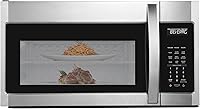
Do Over-the-Range Microwaves Need Venting?
Yes, every over-the-range microwave needs venting, either ducted outside or recirculating through a charcoal filter. A microwave with no vent path just blows cooking fumes and moisture back into the kitchen instead of removing them.
On this page (7 sections)
- Do over-the-range microwaves need venting to run at all?
- How do ducted and recirculating setups differ?
- When should you choose a ducted setup?
- When is a recirculating setup the right call?
- Can you convert a microwave from one venting mode to the other?
- What parts do you need for each venting type?
- Which setup should you pick for your kitchen?
Yes, every over-the-range microwave needs venting, either ducted outside or recirculating through a charcoal filter. A unit with no vent path just blows cooking fumes and moisture back into the kitchen instead of removing them.
So the real question is not whether an over-the-range microwave needs venting but which of the two setups your kitchen can support. That answer shapes the model you buy, the parts you need and how well the unit handles smoke over the long run.
The short answer: duct it outside if the wall or roof allows, and use a recirculating setup only when a duct run is not possible.
Do over-the-range microwaves need venting to run at all?
Yes, but the venting requirement is about the exhaust system, not the cooking. The microwave part will heat food on any setup, while the exhaust fan needs a defined path for the air it moves.
Every over-the-range microwave has a built-in exhaust fan under the cabinet. On a ducted unit, that fan pushes air through a duct and out a wall or roof cap.
On a recirculating unit, the same fan pushes air through a charcoal filter and back into the kitchen through a grille above the door. A unit set up with neither path has no way to handle steam, smoke and grease, so those end up on your cabinets and in the room air.
That is why manufacturers ship each unit set up for one mode or the other, and why installation instructions always ask you to confirm the venting type before mounting. The cooking side is separate, so you can plug in and run the microwave even before the vent work is finished.
The vent matters for the air quality in the room and for keeping grease off your kitchen surfaces.
How do ducted and recirculating setups differ?
Ducted venting sends air outside, while recirculating venting cleans the air and returns it to the kitchen. That single difference drives the cost, the installation work and the performance you get.
A ducted setup moves smoke, steam and odors out of the house. It needs a duct run from the top or back of the microwave to a wall cap or roof cap, plus a damper to keep outside air from coming back in.
The run can be 3-1/4 x 10 inch rectangular duct or round duct, depending on the model's blower opening.
Many units ship with a rectangular opening and need a transition to match round duct. A recirculating setup needs no duct, just a charcoal filter behind the vent grille.
It catches grease and some odors, then blows the air back into the room.
It costs less to install and fits kitchens where the microwave is not against an outside wall. It also leaves more moisture and smoke in the kitchen than a ducted unit.
If your kitchen already has a duct, keep it. If it doesn't, a recirculating model is the practical fallback.
Our guide to how over the range microwaves are vented covers each path in more detail.
When should you choose a ducted setup?
Choose ducted venting when your kitchen already has a duct run or when you can add one without major remodeling. It is the better long-term choice for anyone who cooks often and wants smoke and odors gone from the room.
A ducted over-the-range microwave performs best when the duct run is short and straight. Long runs with several elbows cut airflow, so keep bends to a minimum and match the duct size to the blower opening.
A 3-1/4 x 10 inch rectangular duct fits many cabinet layouts because it runs flat against the wall. Round duct moves more air per inch but needs more clearance.
The work is the trade-off. Cutting a hole through an exterior wall or the roof, fitting a cap and sealing the joints takes tools and time.
Hiring a contractor adds cost. If you are replacing an old over-the-range microwave that was already ducted, the hard part is done.
Check the existing duct size and the blower opening on the new unit before you buy, so the two match.
When is a recirculating setup the right call?
Choose recirculating venting when no duct exists and adding one would mean major work, such as an interior kitchen wall or a rental you cannot modify. It keeps the install simple and still removes grease from the air.
Recirculating units trade outside exhaust for a filter. The fan pulls smoke and steam through a grease filter and then a charcoal filter, and returns the air through the top grille.
Grease is trapped well, which protects cabinets and walls. Odors are reduced but not eliminated.
Moisture stays in the room, so run a nearby exhaust fan or open a window when you boil or fry. The filter is the maintenance cost.
Charcoal filters load up and stop working, so plan on replacing them every 3 to 6 months. Grease filters need washing more often.
For a kitchen where heavy frying is rare, recirculating venting is a reasonable fit. For daily cooking, ducted is worth the extra work.
Can you convert a microwave from one venting mode to the other?
Yes, many over-the-range microwaves ship able to run in either mode, and the change is mostly about the blower position and the filter. Check your model's manual for the allowed blower positions before starting.
Most units ship set for recirculating because that is the simplest install. To switch to ducted, you usually rotate the blower so it points toward the top or rear vent opening, remove the charcoal filter, and connect the duct.
To go the other way, rotate the blower back, fit a fresh charcoal filter and block the duct opening as the manual directs.
The change takes basic tools and about an hour for someone comfortable removing the unit or reaching the blower. Not every model converts easily.
Some have the blower fixed in one position or use a vent design that only works one way.
If you plan to switch, confirm the supported modes before you buy. The conversion also changes how the unit sounds and how much air it moves, so a model rated for strong ducted airflow may feel weaker in recirculating mode.
What parts do you need for each venting type?
Ducted venting needs a duct run, a transition fitting if the sizes differ, a wall or roof cap and sealing tape. Recirculating venting needs a charcoal filter, and that is about it.
The most common mismatch is a rectangular blower opening against round duct. A transition fitting bridges the two without leaks.
The Pasimy transition adapts a 3-1/4 x 10 inch rectangular opening to 4 inch round duct. It is galvanized steel with a smooth interior and a gentle curve that keeps airflow moving, and its zinc finish resists rust indoors and out.
Fit it with foil tape and screws, and wear gloves because the edges can be sharp.
At the outside end, the wall cap closes the run when the fan is off. The JIANBENKJ wall vent cap fits 3-1/4 x 10 inch rectangular duct and measures 10-1/4 inches wide by 3-2/5 inches high.
It has a spring-loaded damper with a silicone pad that seals tight when the microwave fan stops, plus a screen that keeps birds and pests out. The screen opens with a screwdriver for cleaning.
It is 28 gauge galvanized steel and installs with pre-drilled holes and foil tape.
For recirculating units, the charcoal filter is the part that does the odor work. The FIMXSD 3-pack replaces WB06X10807 and fits GE models such as JVM7195SK6SS, JVM7195EK6ES and PNM9216SK5SS.
The filters sit on top of the grille behind the vent and swap without tools. Replace them every 3 to 6 months for best odor control.
Before buying any vent part, measure the duct opening and the microwave's blower outlet. A close fit keeps the run sealed and avoids adapters you do not need.
Which setup should you pick for your kitchen?
Pick ducted venting if a duct run is possible and you cook often. Pick recirculating venting if there is no duct and you cannot add one, or if you rarely fry and want a simple install.
The deciding factors are the wall behind the microwave, your cooking habits and the budget for installation work. An exterior wall or an existing duct makes ducted the clear choice.
An interior wall with no existing duct makes recirculating the practical one. In either case, match the microwave's vent opening to the parts you buy so the install goes smoothly.
Do over the range microwaves need venting? Yes, and the mode you choose decides how well the unit handles smoke, steam and odors.
A ducted setup clears the kitchen air best. A recirculating setup keeps grease out of the air and needs regular filter changes.
If you want more exhaust power, compare the best over-the-range microwave with high CFM or browse the best over-the-range microwaves for venting. If you are weighing a hood instead, our over-the-range microwave vs range hood comparison covers the trade-offs.
Frequently asked questions
Can you use an over-the-range microwave without any vent at all?
No. A unit set up with neither an outside duct nor a charcoal filter has no way to handle steam, smoke and grease, so those end up on your cabinets and in the room air.
Every model ships set up for ducted or recirculating venting, and you have to pick one before installation.
Does a recirculating over-the-range microwave remove smoke?
It catches grease and some odors but it does not remove smoke from the kitchen the way a ducted setup does. Recirculating units pull air through a filter and send it back into the room, so strong smoke lingers longer.
Can I switch a ducted microwave to recirculating?
Yes, in most cases. You remove or reverse the blower to send air up through the top grille, fit a fresh charcoal filter, and skip the outside duct.
Check the manual for your model's blower positions, since not every unit converts easily.
How often should the vent filter be changed?
Grease filters need washing every month or two depending on how much you cook. Charcoal filters in a recirculating unit are usually replaced every 3 to 6 months, and more often in a kitchen that sees daily frying.