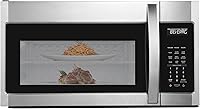
How to Measure for an Under Cabinet Range Hood
To measure for an under cabinet range hood, check the cabinet's width and depth, the height from cooktop to cabinet bottom, and the vent opening's position and size. A 30-inch hood needs a cabinet at least 30 inches wide, at least 18 inches of clearance above the cooktop, and a vent that lines up with the hood's duct.
On this page (9 sections)
- What tools do you need to measure for an under cabinet range hood?
- How wide should the range hood be for your cabinet?
- How do you measure cabinet depth and the hood's fit?
- How much clearance do you need above the cooktop?
- How do you find the vent opening and duct size?
- How do you plan the duct run before you buy?
- Which hood fits the measurements you took?
- When should you choose a different hood style?
- What should you write down before you order?
To measure for an under cabinet range hood, check the cabinet's width and depth, the height from cooktop to cabinet bottom, and the vent opening's position and size. A 30-inch hood needs a cabinet at least 30 inches wide, at least 18 inches of clearance above the cooktop, and a vent that lines up with the hood's duct.
The order matters less than getting each number right. Write down all four measurements before you shop so the hood you order fits the cabinet, the cooktop and the duct on the first try.
What tools do you need to measure for an under cabinet range hood?
A tape measure, a pencil and a step stool cover the whole job. A level helps confirm the cabinet sits square, and a notepad keeps the numbers in one place.
Measure at cabinet height rather than at eye level. A step stool lets you see the underside of the cabinet, where the mounting screws and vent opening sit.
Check that the cabinet's bottom edge is level across its width. A cabinet that sags or sits out of square changes how the hood hangs and where its edges land.
Take each measurement twice. Cabinet widths often come out a fraction over or under a round number, and that fraction decides whether a standard hood fits flush.
How wide should the range hood be for your cabinet?
Match the hood's width to the cabinet's width. A 30-inch cabinet takes a 30-inch hood, and a 36-inch cabinet takes a 36-inch hood.
Measure the cabinet's outside width at the front edge, then again at the back, and use the narrower figure.
Measure from the cabinet's left side to its right side, not between the doors. Door overhang and trim can make the cabinet look wider than its body.
If the cabinet sits against a wall on one side, measure from that wall to the open edge. The hood's edge should line up with the cabinet's edge so the finished run looks straight.
Standard hood widths run 24, 30 and 36 inches. A cabinet that falls between those sizes needs a hood that covers it, and a hood that's narrower than the cabinet leaves the cabinet's underside exposed at the edges.
What if your cabinet is an odd size?
Pick the next standard width up when your cabinet falls between sizes. A cabinet measuring 31 inches, for example, takes a 36-inch hood if there's room on both sides.
Check what sits beside the cabinet first. A wall or another cabinet limits how far a wider hood can overhang.
If the cabinet is narrower than 24 inches, a compact hood is the practical choice. Measure the open space beside it before you order anything wider.
How do you measure cabinet depth and the hood's fit?
Measure the cabinet's depth from the wall to its front edge, then compare that with the hood's depth. Standard upper cabinets are about 12 inches deep, and many under-cabinet hoods are deeper so they reach out over the burners.
A hood that extends past the cabinet's front edge is normal. It captures smoke closer to the cooktop and doesn't need to sit flush with the doors.
Check the clearance between the hood's front edge and anything in front of the cabinet. A deep hood can crowd a tight galley kitchen or block a cabinet door that swings out.
Measure the cabinet's interior depth too if the hood's motor housing sits up inside it. The housing needs room to fit without hitting shelves or the cabinet's back panel.
How much clearance do you need above the cooktop?
Plan for at least 18 inches from the cooktop to the bottom of the hood. Measure from the highest cooking surface, which for a gas range means the top of the grate, not the counter.
Subtract the hood's height from the cabinet's bottom edge to confirm the gap. An under-cabinet hood hangs below the cabinet, so its height eats into that clearance.
Gas ranges often call for more than 18 inches. Check the range's instructions for the figure the maker recommends, then measure to see whether your cabinet height allows it.
Too little clearance puts the hood close to flames and steam. Too much leaves the hood far from the smoke and weakens how well it captures it.
How do you measure when the cabinet is already installed?
Measure from the cooktop up to the cabinet's bottom edge, then check the hood's height fits in that gap. Use a level to mark a straight line across the cabinet's underside so the hood hangs square.
Note where the old hood's screws sit. Reusing the same holes is easiest when the new hood's mounting pattern matches, so measure the spacing between them.
If the gap is short, a slim hood gives you more clearance. If it's tall, a deeper hood can bring the capture area closer to the burners without moving the cabinet.
How do you find the vent opening and duct size?
Measure the vent opening's position and diameter, then match it to the hood's duct outlet. A ducted hood exhausts through the cabinet above or the wall behind, and the opening needs to line up with the hood's outlet.
Measure the distance from the cabinet's left edge to the center of the vent hole. Measure the hole's diameter as well, since round ducts come in common sizes like 5 inches and the hood's outlet must match.
For a rear vent, measure from the cabinet's bottom edge up to the center of the wall opening. A hood with a top vent won't reach a rear opening without an adapter, so the direction matters as much as the size.
A ductless hood needs no vent opening at all. It recirculates air through a filter and back into the kitchen, which suits cabinets with no duct above them.
How do you plan the duct run before you buy?
Sketch the duct's path from the hood to the outside before you commit to a model. A short, straight run with few bends moves air better than a long one with elbows.
Count the bends you'll need. Each turn adds resistance, and a hood rated for a certain airflow performs best when the duct run stays simple.
Check what's above the cabinet. A soffit, a second floor or a finished ceiling can block a straight-up run and push the duct sideways.
The vent's exit point matters too. Measure to the nearest outside wall or roof line so you know how much duct the run needs.
Our guide to how over-the-range microwaves are vented covers the same duct paths if you're weighing a microwave instead.
Which hood fits the measurements you took?
The COSMO COS-5MU30 suits a 30-inch cabinet with a duct run, and the CIARRA is the pick for a ductless setup or a very slim space. The Broan-NuTone works when there's no duct at all and you want a simple recirculating hood.
The COSMO measures 29.75 inches wide and 19.75 inches deep, so it covers a 30-inch cabinet's width with a small margin. Its 5.5-inch height leaves room in the clearance gap, and it can convert to ductless with an optional carbon filter kit.
The vent uses 5-inch round duct, so measure the opening against that figure.
The CIARRA measures 29.76 inches wide and 3.94 inches tall, so it fits cabinets with very little room between the cooktop and the cabinet's bottom edge. It works ducted or ductless, and the top vent takes a 4.8-inch round damper.
Its depth is 19.68 inches, close to the COSMO's.
The Broan-NuTone measures 30 inches wide and 6 inches tall, and it installs as a non-ducted hood only. That suits a cabinet with no duct run and no wall opening.
It needs at least 18 inches above the cooktop, which matches the clearance figure you measured.
When should you choose a different hood style?
If the cabinet can't take a vent, a ductless model is the answer, and if the space above is taken by a microwave, a hood may not fit at all. The choice follows the measurements rather than the other way around.
An over-the-range microwave replaces the hood and vents the same way. Our comparison of an over-the-range microwave vs a range hood helps if the cabinet run was built for a microwave.
If you need strong exhaust for heavy cooking, look at an over-the-range microwave with high CFM instead. It combines the hood's vent with the microwave's footprint, so the measurements are similar.
What should you write down before you order?
Keep the cabinet width, depth, clearance height, vent position and duct size in one note. Those five figures answer every fit question before you buy a hood.
Check the clearance figure against the hood's height. A hood taller than the gap won't hang without moving the cabinet.
Confirm the vent direction and diameter against the hood's outlet. A mismatch needs an adapter or a different model.
When you've settled on a hood, learn how to clean over-the-range microwave filters if your setup uses a microwave, since the same grease traps up under the cabinet. For a hood's mesh filters, rinse them the same way when they load up.
To measure for an under cabinet range hood properly, take the cabinet width first and let the rest follow. Width decides the model size, depth and clearance decide whether it fits, and the vent position and duct size decide whether it can exhaust.
Write all five down, then compare them with the hood's own figures before you order.
Frequently asked questions
What width range hood fits a 30-inch cabinet?
A 30-inch cabinet takes a 30-inch range hood. The hood body should cover the cabinet's width so the edges line up under the doors.
If your cabinet measures between standard sizes, pick the hood that matches or slightly exceeds the cabinet width, not one that overhangs into open space.
How much clearance do I need between the cooktop and the hood?
Plan for at least 18 inches from the cooktop to the bottom of the hood. Gas cooktops often call for more, so check your range's instructions first.
Measure from the highest burner or grate, not the counter, and make sure the cabinet leaves enough room for the hood's height.
Does an under-cabinet hood need a vent in the cabinet?
A ducted hood needs a vent opening in the cabinet above or a rear wall opening behind it. Measure the duct's position and diameter so it meets the hood's outlet.
A ductless model recirculates air and needs no vent, but it still needs the same cabinet width and clearance.
How deep should the cabinet be for an under-cabinet range hood?
Standard upper cabinets are about 12 inches deep, while under-cabinet hoods are often deeper. A hood that extends past the cabinet's front edge is normal and helps capture smoke.
Check that the hood's depth leaves room for your cooking and doesn't block the cabinet doors.
Can I measure for a hood without removing the old one?
You can measure width and clearance with the old hood in place, but vent position and duct size are easiest to confirm with the hood removed. Note the old hood's outlet location before taking it down, then measure the opening in the cabinet or wall so the new hood's duct lines up.