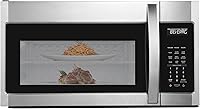
Over-the-Range vs Countertop Microwave: Which Is Better? (October 2026)
Choose an over-the-range microwave to free counter space and add ventilation; choose a countertop model for flexible placement and more cooking modes. The over-the-range vs countertop microwave decision comes down to your kitchen layout, ventilation needs and installation plans.
On this page (7 sections)
- Over-the-range vs countertop microwave: which fits your kitchen?
- What does each microwave do for ventilation?
- Which one gives you more cooking options?
- Who should choose an over-the-range microwave?
- Who should choose a countertop microwave?
- How should you set up and care for each format?
- How do you make the final choice?
Choose an over-the-range microwave to clear counter space and add a cooktop fan; choose a countertop microwave for flexible placement and more cooking modes. In this over-the-range vs countertop microwave comparison, the practical choice is between using the space above the stove and giving up some counter space.
The GE and Midea combine microwave cooking with ventilation and mount above the range. The Toshiba sits on the counter and adds air-fry, bake and broil functions.
First decide which job matters more in your kitchen: clearing a work surface, capturing some cooktop fumes, or having extra cooking modes close at hand.
 Best for clearing counter space
GE 1.6 Cu Ft Over-the-Range Microwave (JVM3160RFSS)

Over-the-range vs countertop microwave: which fits your kitchen?
An over-the-range model uses the space above your stove, while a countertop model occupies part of your work surface. Measure both spots, then consider where you need room to prep, set down dishes and reach controls safely.
The GE measures 29.87 in wide, 16.12 in high and 15.56 in deep. The Midea is 29.9 in wide, 16.4 in high and 13.5 in deep.
Both are roughly 30 in wide, but depth and height can affect how they fit between cabinets and above a range.
Those are appliance dimensions, not a complete installation plan. Check the model's instructions for mounting, clearance, electrical access and the wall or cabinet support required.
If the space above your stove is limited, a low-profile over-the-range microwave may be a better direction to explore.
The Toshiba measures 20.6 in wide, 16.4 in deep and 11.8 in high, and weighs 39.2 lb. Allow enough room for the appliance and for its vents as directed by its instructions, and keep the counter around it usable for food preparation.
For a broader overview of the above-stove format, see our guide to over-the-range microwave ovens. If you're replacing an existing unit, compare the opening and mounting setup with our guide to standard over-the-range microwave dimensions.
What does each microwave do for ventilation?
The GE and Midea include 300 CFM fans; the Toshiba does not provide a cooktop hood fan. Choose an over-the-range model if you want a fan above the range, but plan around your kitchen's vent route and cooking habits.
The GE has a 2-speed fan and a replaceable charcoal filter. The Midea has adjustable fan speeds.
These features can help reduce cooking odors and fumes, but the right setup also depends on where air goes after it passes through the microwave hood.
A countertop microwave heats food without collecting smoke or steam above the stove. If you choose one, plan a separate hood or another suitable ventilation setup when you need to capture cooktop fumes and moisture.
The over-the-range microwave vs range hood comparison explains the tradeoff between combining appliances and using a dedicated hood. For help thinking about airflow, read what CFM to look for in an over-the-range microwave.
Which one gives you more cooking options?
The Toshiba has the broadest set of cooking modes among these picks, while the GE and Midea focus on microwave cooking. Match those functions to meals you regularly make rather than choosing by the number of buttons.
The Toshiba offers microwave, air fry, bake, broil, combination, low-temperature, odor-removal and defrost functions. Its 1.0 cu ft capacity is smaller than the GE's and Midea's, so think about the dishes you heat most often before choosing a multi-mode appliance.
The GE provides express cooking, 4 convenience cook settings, auto defrost and 10 power levels. Its turntable can be switched off for larger or oddly shaped dishes.
The Midea has 18 auto menus, 10 power levels and defrost. Its 12.4 in turntable is described as able to hold a 12 in pizza, which may be useful if pizza is a regular microwave meal in your home.
For another above-stove option, consider our GE JVM3160RFSS review. If you want to compare more models by layout and features, see our best over-the-range microwave ovens guide.
Who should choose an over-the-range microwave?
Choose an over-the-range microwave if you want to reclaim counter space and add a fan above the cooktop. It suits kitchens with a compatible mounting area and shoppers ready to plan a fixed installation.
This format is a strong fit when your counter is crowded, you heat food often, and you want a light and fan close to the range. The GE and Midea each combine a 300 CFM fan with microwave cooking; the GE also has a replaceable charcoal filter and a 2-speed fan.
Skip this format if your cabinets, available clearance or mounting area won't accommodate the appliance, or if you need a microwave you can move between locations. A unit mounted over a stove also places its controls and cooking cavity higher than a typical countertop setup, so consider who will use it and whether reaching in feels practical.
Before buying, measure the opening and confirm the installation instructions match your kitchen. Our over-the-range installation planning guide covers the preparation to do before mounting.
Who should choose a countertop microwave?
Choose a countertop microwave if flexible placement and extra cooking modes matter more than clearing the counter. It suits renters, temporary kitchens and households that want to choose a location without mounting a microwave above the range.
The Toshiba combines microwave cooking with air fry, bake and broil modes. Its 1.0 cu ft capacity makes it the smaller option in this comparison, so check whether your usual bowls, plates and cookware fit before you commit.
Skip the countertop format if every inch of counter space is valuable or you expect the microwave to handle cooktop ventilation. It won't capture smoke and steam from pots and pans, so you may need a separate hood.
How should you set up and care for each format?
Set up an over-the-range microwave according to its mounting and clearance instructions; give a countertop microwave a stable surface and the clearances its instructions require. Good placement helps you use the controls and clean the surrounding area without crowding the appliance.
For an above-stove unit, verify the opening, cabinet support, electrical access and vent arrangement before installation. Don't treat a similar width as proof that a replacement will fit; mounting points, height and depth matter too.
For a countertop unit, place it on a stable surface that can support its weight and leave the recommended space around its vents. Keep the door and controls easy to reach, and avoid making the top of the microwave a storage shelf unless the instructions allow it.
For either format, wipe spills once the interior is cool and follow the care directions for the turntable and interior surfaces.
On an over-the-range model, check and maintain the ventilation filter as directed. The GE uses a replaceable charcoal filter; the Midea's filter details should be checked in its instructions.
Common mistakes include measuring only the microwave's width, overlooking overhead clearance, blocking countertop vents, and assuming an over-the-range microwave works as a stand-alone countertop appliance. Check the exact installation instructions before you choose a location.
How do you make the final choice?
Pick an over-the-range microwave when freeing counter space and adding a cooktop fan are the priorities; pick a countertop microwave when flexible placement and extra cooking modes matter more. Use the space you have, the ventilation you need and the dishes you cook with to break a tie.
Choose the GE if you want a 300 CFM, 2-speed fan, a replaceable charcoal filter and a turntable-off option. Choose the Midea if the same above-stove format appeals to you and its 1.7 cu ft capacity and 18 auto menus better fit your routine.
Choose the Toshiba if you have a suitable counter and expect to use air fry, bake or broil functions. Its smaller capacity is a reason to check your cookware and meal sizes before choosing it.
In this over-the-range vs countertop microwave decision, installation fit comes first: confirm the spot, clearances and support, then compare capacity and features. For more above-stove buying help, use our guide to choosing an over-the-range microwave.
Our scores reflect how each model's features and dimensions fit the needs of this comparison. Check the model's installation instructions and measurements before you decide.
Frequently asked questions
Is an over-the-range microwave better than a countertop microwave?
An over-the-range microwave is better when you want to free counter space and add a fan above the cooktop. A countertop microwave is better when you want flexible placement or extra cooking modes.
Compare the space you have, the ventilation you need and the installation work you can handle.
Does a countertop microwave need a vent?
A countertop microwave does not replace a range hood, so it won't provide ventilation above the cooktop. If you cook with smoke, steam or strong odors, plan for a separate hood or another suitable ventilation setup.
Can I put an over-the-range microwave on a counter?
An over-the-range model is designed to mount above a stove, while a countertop model is designed to sit on a counter. Don't assume an over-the-range unit can safely sit on a counter; check the exact model's installation instructions before choosing a location.
Which microwave is easier to install?
A countertop microwave is generally simpler to place because it sits on a suitable counter. An over-the-range microwave must be mounted above the stove, so check the installation instructions, cabinet space, electrical access and required clearances before planning the work.