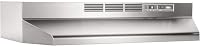
What Does a Convertible Range Hood Mean?
A convertible range hood is one you can install in either of two modes: ducted, where it pushes cooking air outdoors through a pipe, or ductless, where it filters the air and sends it back into the kitchen. The same hood ships ready for both, so you choose the mode at install time.
On this page (9 sections)
- What does a convertible range hood mean in plain terms?
- How does ducted mode work?
- How does ductless mode work?
- What parts do you need for each mode?
- Do you have to buy a carbon filter separately?
- How do you switch a convertible hood between modes?
- Which mode should you choose?
- What should you check before buying a convertible hood?
- The bottom line on what a convertible range hood means
A convertible range hood is one you can install in either of two modes: ducted, where it pushes cooking air outdoors through a pipe, or ductless, where it filters the air and sends it back into the kitchen. The same hood ships ready for both, so you choose the mode at install time.
The word "convertible" describes that choice, not a special motor. A convertible range hood is built so the buyer can match it to the kitchen, whether that kitchen has an outside vent or not.
It means you buy one hood and decide later how it moves air.
What does a convertible range hood mean in plain terms?
It means the hood has two ventilation paths: one that exhausts outdoors and one that recirculates indoors. The motor and fan are the same; the difference is where the air goes after it passes the filters.
In ducted mode, a pipe carries smoke, grease, heat, and moisture to the outside. In ductless mode, the air passes through a carbon filter that traps odors and grease, then returns to the room through a vent at the front.
The term shows up on under-cabinet hoods, wall-mount hoods, and over-the-range microwaves. For the microwave version, see what does over the range microwave mean.
The label also tells you something about the parts list. A convertible hood is sold with the hardware to mount in both modes, or at least with the outlets and settings that make both modes possible.
The buyer decides which path to finish, and that decision usually comes down to one question: is there a vent hole in the wall behind or above the stove? If yes, ducted.
If no, ductless.
How does ducted mode work?
Ducted mode pulls cooking air through the hood's grease filter and pushes it out through a pipe to the outdoors. That pipe is the part you or your installer supply, and it decides how well the hood performs.
The run should be short and straight, with as few bends as possible. Each elbow slows the airflow and lets grease collect inside the pipe.
The pipe ends at a wall cap or roof vent with a damper that keeps outside air from coming back in.
A ducted hood removes heat and moisture as well as smoke. That matters in a kitchen where boiling pots and high-heat frying add humidity and strong smells.
A ducted hood needs a clear outside path, so it suits kitchens with an exterior wall nearby.
The airflow rating tells you how much air the fan can move, and a ducted install lets that figure do its full job. A hood rated at 450 CFM, like the MOLINGDUN model, pushes that much air toward the outside when the pipe run is clear.
A long or crooked run chokes that figure down, which is why the duct path matters as much as the motor.
How does ductless mode work?
Ductless mode filters the air and returns it to the kitchen instead of sending it outside. A carbon filter sits in the air path and absorbs odors, while the grease filter catches oil and moisture.
This mode needs no pipe and no outside wall. That makes it the practical pick for apartments, condos, rentals, and kitchens where the stove sits against an interior wall.
The trade-off is that heat and moisture stay in the room, and the carbon filter needs replacing more often than a grease filter.
Clean or replace filters on schedule or the hood just moves stale air around. The two filters do separate jobs.
The mesh grease filter, which is often dishwasher safe, catches oil before it reaches the carbon layer. If the grease filter is clogged, the carbon filter loads up faster, so keep both on a cleaning and replacement schedule.
What parts do you need for each mode?
Ducted mode needs a pipe and an outside vent; ductless mode needs a carbon filter and a mode setting. A convertible hood may include some of these parts, and the box contents decide what you still have to buy.
- Ducted: a duct pipe, a wall or roof cap with a damper, and clamps or foil tape. Some hoods include a short pipe, like the MOLINGDUN model's 5.9 ft aluminum pipe.
- Ductless: a carbon filter, usually sold as a pair. The grease filter stays in place in both modes.
The MOLINGDUN Range Hood 30 inch arrives with both paths covered. It includes the 5.9 ft aluminum exhaust pipe for direct venting and a carbon filter pair for ductless use.
Its 450 CFM motor, 3 speeds, and dual LED lights make it a fit for a kitchen that might go either way. The brushed 430 stainless steel body and dishwasher-safe aluminum mesh filters keep the upkeep simple in either mode.
Do you have to buy a carbon filter separately?
Sometimes. Some convertible hoods include the carbon filter, and others expect you to buy it.
The difference matters because a ductless install won't filter odors without one.
The CIARRA Ductless Range Hood 30 inch Under takes the CACF006 carbon filter as an optional purchase for recirculating. It's a slim under-cabinet model, just 3.94 in tall, with mesh filters and 3 fan speeds.
In ducted mode it uses a top vent with a 4.8 in round damper and a pipe you supply. Its two LED lights sit on either side of the hood, so the stove is lit whether you cook on the left or the right.
If you plan a ductless install with the CIARRA, add the filter to the order. Compare both modes against microwaves in our guide to over the range microwave vs range hood.
How do you switch a convertible hood between modes?
The switch is usually a flap or adjuster on the motor housing, plus adding or removing the carbon filter. The exact steps vary by brand, so follow the hood's instructions.
For ducted mode, the adjuster points to the ducted position and the top outlet connects to the pipe. For ductless mode, the adjuster moves to the ductless position, the outlet cover goes on, and the carbon filter is fitted.
The COMFEE' 30 Inch Under Cabinet Range Hood is built for either mode, with a stainless steel body and a 5-layer reusable aluminum filter.
What are the sub-steps for a ductless switch?
First, turn the adjuster on the motor housing to the ductless position so the air is routed through the front vent. Second, fit the carbon filter in its slot behind the grease filter.
Third, put the outlet cover over the top opening so air can't escape upward. Then run the fan on high for a minute and check that air comes out the front vent, not the top.
If it still escapes upward, the adjuster is in the wrong spot. Reverse the steps to go back to ducted: remove the cover, pull the carbon filter, and set the adjuster to ducted.
Measure before you mount any hood, in either mode. Our guide to how to measure for a range hood insert covers the width, depth, and height checks that prevent a return.
Which mode should you choose?
Pick ducted mode if you can reach an outside wall or roof; pick ductless if you can't. The kitchen layout usually makes the decision for you.
Go ducted when you cook often with high heat, boil large pots, or want heat and moisture out of the room. Go ductless in a rental or apartment where cutting a vent hole isn't allowed, or when the stove sits far from an outside wall.
Our guide to how are over the range microwaves vented explains the same two paths for microwave hoods.
What should you check before buying a convertible hood?
Check the box contents, the duct size, and the mode instructions before you buy. These three details decide whether the install goes smoothly.
First, see whether a carbon filter and pipe are included. A hood that includes both saves a second order.
Second, match the duct outlet size to the pipe you'll use; a 4.8 in round damper needs a matching pipe. Third, look for clear mode instructions, since the adjuster position must be right.
Also check the hood's height and depth against your cabinets. A slim under-cabinet model like the CIARRA fits shallow spaces, while a pyramid wall-mount model needs more clearance above the stove.
The MOLINGDUN hood measures 17.76 in deep by 29.53 in wide by 22.56 in high and weighs 14 pounds, so it needs open wall space above the stove rather than a cabinet directly overhead.
The bottom line on what a convertible range hood means
A convertible range hood gives you one hood with two install choices, ducted or ductless, and you pick the mode when you install it. That flexibility means the same model can fit an outside-vented kitchen or a recirculating one.
If you want both paths covered in the box, the MOLINGDUN model includes the pipe and a carbon filter pair. If your kitchen already vents outside, the CIARRA or COMFEE' under-cabinet hoods are slimmer fits.
Decide the mode first, then buy the hood that matches it.
Frequently asked questions
Do convertible hoods come with the carbon filter for ductless use?
Not always. Some include a carbon filter pair in the box, like the MOLINGDUN model, while others need the filter bought separately.
Check what is in the box before you plan a ductless install, since a hood without the filter cannot recirculate properly.
Does a convertible hood vent outside out of the box?
Only if you connect it to ductwork. In ducted mode the hood needs a pipe to the outside wall or roof, and the damper sits over the top outlet.
Without that pipe, the hood cannot push air outdoors, so the duct run is the part you supply.
Is a ductless range hood as good as a ducted one?
Ducted mode removes smoke, heat, and moisture from the kitchen, while ductless mode filters grease and odors and returns the air indoors. Ductless is the practical choice when no outside vent exists, but it cannot remove heat and moisture the way a ducted hood does.
Can I switch a convertible hood from ducted to ductless later?
Often yes, if the model has a mode setting and you add a carbon filter. The switch usually means moving a flap or adjuster on the motor housing and fitting the filter.
Check the hood's instructions, since the steps differ by brand.
How do I know if my kitchen can use ducted mode?
You need a clear path from the hood to an outside wall or roof, plus room for the pipe. A short, straight run with few bends works best.
If the nearest outside wall is far away or blocked by cabinets, ductless mode is the simpler fit.