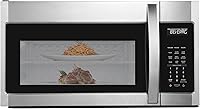
How Much Do Over-the-Range Microwaves Weigh?
Most over-the-range microwaves weigh 40 to 60 pounds. A full-size 1.6 cu ft model runs about 40 to 55 lb, while low-profile units are often lighter or similar depending on their vent fan.
On this page (8 sections)
- How much do over-the-range microwaves weigh by size?
- What makes one over-the-range microwave heavier than another?
- Can you install an over-the-range microwave alone?
- Does the cabinet above need extra support?
- How does the weight affect delivery and moving it home?
- Which over-the-range microwaves suit different kitchens?
- What else should you know about weight and installation?
- How much do over-the-range microwaves weigh, and what should you do with that number?
Most over-the-range microwaves weigh 40 to 60 pounds. A full-size 1.6 cu ft model like the GE JVM3160RFSS comes in at 40 lb.
Slim low-profile units save height above the stove, but they still carry a metal body and a vent fan, so their weight lands in a similar range. That number matters because you'll lift this appliance above shoulder height, often into a tight space between cabinets, and the cabinet above has to carry it for years.
Knowing how much do over-the-range microwaves weigh before delivery day tells you whether to call a second pair of hands or rent a support lift. Below is what drives the weight up or down and how to plan the install around it.
How much do over-the-range microwaves weigh by size?
Expect roughly 40 to 55 pounds for a full-size over-the-range microwave. The GE 1.6 cu ft JVM3160RFSS weighs exactly 40 pounds, which is on the lighter end for its class.
Low-profile models are close behind. The GE Profile UVM9125STSS 1.2 cu ft unit weighs 51 pounds, so cutting interior height does not always cut weight.
The extra heft there comes from the vent system and the bottom-control design. As a rule, a bigger cavity adds some pounds, but the vent fan, cabinet, door and control panel make up a large share of the total.
Always plan the lift around the stated weight for the model you buy, not a generic average. A 10 lb difference matters when the unit is overhead.
What makes one over-the-range microwave heavier than another?
Vent fan power and metal thickness are the big weight drivers. A 400 CFM fan and its housing add mass over a 300 CFM setup.
Stainless steel bodies and glass turntables also add pounds.
The GE JVM3160RFSS uses a 300 CFM two-speed vent and a 12.8-inch glass turntable and stays at 40 lb. The GE Profile UVM9125STSS pairs a 400 CFM vent with an integrated handle and bottom controls, and its weight rises to 51 lb.
Sensor cooking and melt features add electronics and sensors but only small weight. Size still counts: a 1.6 cu ft cavity needs a larger cabinet than a 1.2 cu ft one.
Check each model's listed weight before you buy, since two microwaves with the same width can differ by 10 lb or more.
Can you install an over-the-range microwave alone?
No, lifting one alone is not safe. At 40 to 60 lb, the unit is wide and awkward, and you'll raise it above counter height into a gap between cabinets.
The usual safe method is two people, with one holding the microwave against the wall plate while the other drives the mounting bolts.
A support lift or a sturdy temporary shelf helps if you're working alone.
Clear the stove below first so a dropped unit doesn't land on a hot cooktop. Wear gloves with grip.
Measure the cabinet opening and the mounting plate position before the lift, so nobody is guessing while holding 40 lb overhead. Our guide to what an over the range microwave means covers the basic mounting setup if this is your first one.
Does the cabinet above need extra support?
Yes, the upper cabinet carries much of the load and must be firmly attached to studs. An over-the-range unit mounts to the cabinet above and usually to a rear wall plate as well.
The GE JVM3160RFSS hangs from the cabinet and wall per its install instructions.
Before you buy, open the cabinet and check that its screws reach wall studs or solid blocking. A cabinet held only by drywall anchors is not enough for 40 to 60 lb plus the pull of opening the door.
If the cabinet feels loose, add blocking or have a carpenter reinforce it. This step costs little and prevents a slow sag or a sudden failure later.
It also helps to confirm the microwave width matches the cabinet base, so the bolts line up.
How does the weight affect delivery and moving it home?
Plan the delivery path before the box arrives. A 40 to 55 lb microwave ships in a larger carton, and the box is wide, so doorways and stair turns matter.
Measure the doorway, the hall corner and the stair width first.
Have the unit delivered as close to the kitchen as possible.
If you pick it up yourself, bring a helper and a hand truck with a strap. Keep the box upright and don't lift it by the door handle or the vent grille.
Once inside, rest it on a table at counter height so you don't have to lift from the floor to overhead in one move. Unpack and inspect the unit before the old one comes down, so you're not stuck without a microwave if the new one is damaged.
Which over-the-range microwaves suit different kitchens?
A full-size 1.6 cu ft model suits most family kitchens; low-profile units suit tight cabinet gaps. These three cover the common cases, and each weight tells you something about the lift and the cabinet load.
Who should choose the GE 1.6 cu ft model?
This is the pick for most kitchens that want a full-size cavity and the lightest lift here. It weighs 40 pounds, so it's the easiest of the three to raise with a helper.
The 30-inch width fits standard cabinet openings. It has 10 power levels, one-touch express cooking and a child lock.
The 300 CFM vent handles everyday steam and odors. At 40 lb it's the lightest of these three, which makes a two-person install more forgiving.
If you're replacing an older unit and keeping the same cabinet, this is the simplest like-for-like swap. For a dark finish in the same style, see the black over the range microwave options before you commit to stainless.
Who should choose the Midea low-profile model?
This one suits kitchens where the space above the stove is short. It fits into the same space as an undercabinet hood in many cases, so you don't always need to rebuild the cabinet.
It has a 1.2 cu ft cavity and a 400 CFM vent fan. The smart features include voice control and app control, plus sensor cook and sensor reheat.
The trade-off is a smaller interior than the GE 1.6 cu ft model. A low-profile unit saves height, not necessarily weight, so still plan the lift with a helper.
It's a good fit when your old hood sat low and you want to keep the same cabinet line. Compare it against countertop options in our over the range vs countertop microwave guide if space is the main concern.
Who should choose the GE Profile low-profile model?
It weighs 51 pounds, so the cabinet and the lift deserve extra care.
It has bottom controls and an integrated handle, which keeps the front clean. The two-speed 400 CFM vent and LED cooktop lighting are the practical upgrades over a basic model.
Sensor cooking adjusts time and power, and the melt feature handles butter, caramel and chocolate. Defrost works by time or weight.
At 51 lb it's the heaviest here, so check your cabinet mounting before install. For a white kitchen, browse the over the range microwave ovens in white picks to match the low-profile look.
What else should you know about weight and installation?
Weigh the trade-offs before you buy, not during the lift. A heavier unit often means a stronger vent or more features, and a lighter one is easier to handle.
Match the microwave width to your cabinet, confirm the vent can recirculate or vent outside as your kitchen allows, and check the mounting hardware in the box.
Keep the manual for the filter and vent setup. The GE models use a charcoal filter for recirculating setups.
Plan the lift for a day when you have help and the stove is cool. If the cabinet is weak, fix it first.
None of these units is light enough to hang on drywall anchors alone. A little prep keeps the install safe and the microwave steady for years.
How much do over-the-range microwaves weigh, and what should you do with that number?
Plan for 40 to 60 pounds and arrange help and cabinet support before delivery. The GE JVM3160RFSS at 40 lb is the lightest and easiest lift of the three here.
The GE Profile UVM9125STSS at 51 lb brings a 400 CFM vent and sensor cooking but asks more of the cabinet. The Midea low-profile unit trades cavity size for overhead clearance.
Pick the GE 1.6 cu ft model for most kitchens that want a full-size cavity and a lighter lift. Pick a low-profile unit when the space above the stove is tight.
Either way, check the cabinet mounting and have a second person on hand for the lift.
Frequently asked questions
Can one person lift an over-the-range microwave?
Usually not safely. At 40 to 60 lb the load is awkward, wide and held above shoulder height, so use two people or a support lift.
One person should guide the cabinet while the other takes the weight.
Does an over-the-range microwave need extra cabinet support?
It mounts to the cabinet above and often to a rear wall plate. Check the manual's mounting requirements and confirm the cabinet is firmly attached to studs before hanging 40 to 60 lb.
Add blocking if the cabinet feels loose.
Is a low-profile over-the-range microwave lighter than a full-size one?
Not always. Low-profile models save height, not necessarily weight.
The Midea 1.2 cu ft low-profile unit and the GE Profile 1.2 cu ft model both carry vent fans and full metal bodies, so compare each model's stated weight rather than assuming slim means light.
How much does a 1.6 cu ft over-the-range microwave weigh?
The GE 1.6 cu ft model weighs 40 pounds. Larger capacity usually adds some weight, but the vent fan, cabinet and door design matter as much as interior volume.
Always check the specific model's weight before you plan the lift.
Do I need to remove the old microwave before checking the weight?
No. Look up the new model's weight first so you can arrange help and a support lift.
Then remove the old unit, and compare its weight with the new one to see whether the same mounting holes and cabinet support still work.