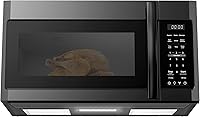
What Is the Smallest Over-the-Range Microwave?
The smallest over-the-range microwaves are low-profile models about 10 inches tall, which is roughly 6 to 7 inches shorter than a standard OTR. They fit in the same slot as an under-cabinet range hood, so most kitchens gain cabinet and sightline space without moving the cutout.
On this page (8 sections)
- What counts as the smallest over-the-range microwave?
- How small are these low-profile models in real numbers?
- Why does height matter more than width in a small kitchen?
- What do you give up when you pick the smallest model?
- Which compact OTR fits which kitchen?
- How do you measure your kitchen for a small OTR?
- Do these models replace a range hood, or add to one?
- Which one should you buy?
The smallest over-the-range microwaves are low-profile models about 10 inches tall, which is roughly 6 to 7 inches shorter than a standard OTR. They fit in the same slot as an under-cabinet range hood, so most kitchens gain cabinet and sightline space without moving the cutout.
That makes "smallest" less about width and more about height. Nearly every over-the-range microwave is 30 inches wide to match the range below it.
The real difference is how much vertical space the body takes up and how much of the cooktop it covers.
What counts as the smallest over-the-range microwave?
The smallest category is the low-profile or slim OTR, and its height is the defining number. Standard over-the-range microwaves run about 16 to 17 inches tall.
Low-profile models sit around 10 to 10.5 inches.
Width stays close to 30 inches on almost all of them, because they mount over a standard 30-inch range. Depth lands near 18 to 19 inches, so the microwave lines up with typical upper cabinets.
The height gap is what changes your kitchen. A slimmer body frees wall space above the cooktop and leaves more room between the range and the cabinets.
It also opens up the view across the kitchen instead of putting a deep box at eye level.
So the smallest OTR microwave is the one with the lowest profile that still fits your cabinet opening and vent setup. Three current models sit right in that compact class.
How small are these low-profile models in real numbers?
The Midea low-profile model measures 10.3 inches tall, 29.9 inches wide and 18.2 inches deep. That combination is the smallest height among the three picks here, and the extra width leaves a little room in a 30-inch opening.
The GE Profile low-profile unit comes in at 10.31 inches tall, 29.88 inches wide and 18.63 inches deep. Its body is almost the same height, with slightly more depth to account for the handle and venting.
The Samsung Smart SLIM measures 10.75 inches tall, 29.88 inches wide and 19.13 inches deep. It is the tallest of the three by a small margin, but it still qualifies as a slim profile next to a full-size OTR.
Those fractions of an inch matter when your cabinet run is tight. Measure the clear opening between the cabinet above and the cooktop, not just the width.
The slimmest body in this group is the Midea, and the Samsung gives up less than half an inch to it.
Why does height matter more than width in a small kitchen?
Height is the number that decides whether the microwave blocks your view and whether your cabinet run still works. A standard 16-inch body can crowd a kitchen with low ceilings or shallow cabinets above the range.
A low-profile OTR trades height for width. The body stays close to the depth of your upper cabinets, so it reads as part of the cabinetry instead of a box hanging over the stove.
That helps in galley kitchens and open-plan spaces where the range faces the living area.
It also changes the vent hood effect. The closer, slimmer body sits lower over the cooktop and captures steam from the front burners, which is the main reason people keep an OTR at all.
If you want the basics on that role, our explainer on what does over the range microwave mean covers the hood and cooking duties together.
Width still has to match the range and the cabinet opening. A 30-inch body over a 30-inch range is the normal pairing, and the compact models keep that standard width.
What do you give up when you pick the smallest model?
You give up interior height and some vent airflow, and you should know that before you buy. A 1.1 or 1.2 cubic foot interior holds a dinner plate flat, but a tall stockpot or a large covered dish can be a tight fit.
Vent airflow on these compact units sits at 400 to 550 CFM. That is enough for everyday cooking.
Heavy searing and deep frying may call for more, so check the CFM number against how you actually cook.
A standard OTR can offer more interior room and more venting for the same 30-inch width. The slim design earns its keep through height and sightlines, not through raw capacity.
None of that means a compact OTR heats food worse. Power on these three runs from 1,000 to 1,100 watts, which sits in the normal band for over-the-range units.
The trade-off is vertical room and vent strength, not heating speed.
Which compact OTR fits which kitchen?
The right pick depends on your cabinet opening, your vent setup and how much you cook on the range. The best all-round choice here is the Midea low-profile model, because it pairs the lowest height with a 1.2 cubic foot interior and smart controls.
Best for most small kitchens: the Midea low-profile model
The Midea is the best pick overall for a tight kitchen. It measures 10.3 inches tall, so it sits lowest of the three, and its 1.2 cubic foot interior gives you more room than the Samsung's 1.1 cubic feet.
Midea builds in sensor cook and sensor reheat, so the unit adjusts time and power on its own. Voice control and smart home support let you start cooking or run the vent from an app.
The vent fan moves 400 CFM.
Best for a sleek built-in look: the GE Profile low-profile model
Choose the GE Profile if you want controls tucked under the front edge and a cleaner cabinet line. It measures 10.31 inches tall and 1.2 cubic feet inside, with a 1,000-watt cooking power.
The integrated handle and bottom controls keep the front face simple. A two-speed 400 CFM vent handles smoke and odors, and LED cooktop lighting brightens the whole stovetop.
The GE Profile adds a melt feature for butter, chocolate and caramel, plus time and weight defrost options. It also lets you switch the turntable on or off, which helps with square dishes.
If you want to compare finishes, see our roundup of the black over the range microwave options.
Best for smart features and a 550 CFM vent: the Samsung Smart SLIM
Pick the Samsung if airflow and app control matter most to you. It is the tallest of the three at 10.75 inches, but it still counts as a slim OTR and brings a 550 CFM vent, the strongest here.
The 1.1 cubic foot interior is the smallest of the group, though the ceramic enamel lining wipes clean easily. Wi-Fi and voice control let you manage cooking and venting remotely.
Sensor cook and a LED light bar round out the everyday features.
How do you measure your kitchen for a small OTR?
Start with three numbers: the cabinet opening width, the clear height above the cooktop and the cabinet depth. A 30-inch opening is standard, but older kitchens vary, so measure the actual gap.
Then check the height between the cooking surface and the bottom of the upper cabinets. Electric ranges usually need about 30 inches of clearance, and gas ranges often need more.
A low-profile body fits that gap without crowding the burners.
Measure cabinet depth too. A slim OTR is close to 18 to 19 inches deep, so it should line up with standard uppers.
If your cabinets are shallow, the body may stick out past the doors.
Finally, find your vent path. These models vent to the outside through the top or rear, or recirculate through a filter.
Match the vent position to your existing ductwork before you order.
Do these models replace a range hood, or add to one?
They replace the range hood. An over-the-range microwave combines a vent fan and a microwave in one unit, so it takes the hood's place above the range.
That is why the vent position and CFM rating matter as much as the cooking features.
You do not need a separate hood underneath. The microwave's fan pulls smoke, steam and odors up and out, or through a filter if you recirculate.
For the full picture of how the two jobs fit together, read how do over the range microwaves work.
This is also the main reason to choose an OTR over a countertop unit. It frees the counter and handles venting at the same time.
If you are still weighing the two, our comparison of over the range vs countertop microwave lays out the space and install differences.
Which one should you buy?
For most small kitchens, the smallest over-the-range microwave worth buying is the Midea low-profile model, at 10.3 inches tall with a 1.2 cubic foot interior. It gives you the lowest body, the most interior room of the three and smart controls for everyday cooking.
Choose the GE Profile if you prefer bottom controls and an integrated handle for a cleaner front. Choose the Samsung if the 550 CFM vent and Wi-Fi control matter more than the extra fraction of an inch in height.
Before you order, measure the cabinet opening, the clearance above the cooktop and the depth of your uppers. The smallest OTR microwave only helps if it drops into the slot your kitchen already has.
Frequently asked questions
Do low-profile over-the-range microwaves fit standard cabinets?
Most do. Low-profile OTRs are built to slide into the same opening as a typical under-cabinet range hood, which is commonly 30 inches wide.
Check your cabinet depth and the mounting plate before ordering, because the vent position and outlet location still need to line up.
Does a smaller over-the-range microwave mean less cooking power?
Not always. The compact models here run at 1,000 to 1,100 watts, which is in the same range as many full-size OTRs.
The main trade-offs are usually vent airflow and interior height rather than raw heating power.
Can a low-profile OTR microwave replace my range hood?
Yes, that is its main job. It vents smoke, steam and odors from the cooktop while heating food underneath.
Airflow on compact models tends to run lower than a full-size OTR, so check the CFM rating if you sear or fry often.
How much clearance do I need above the cooktop?
Electric cooktops usually need about 30 inches between the cooking surface and the microwave bottom, and gas ranges often need more. The manufacturer's install guide gives the exact figure, and the low-profile design keeps the microwave body out of the way within that gap.